
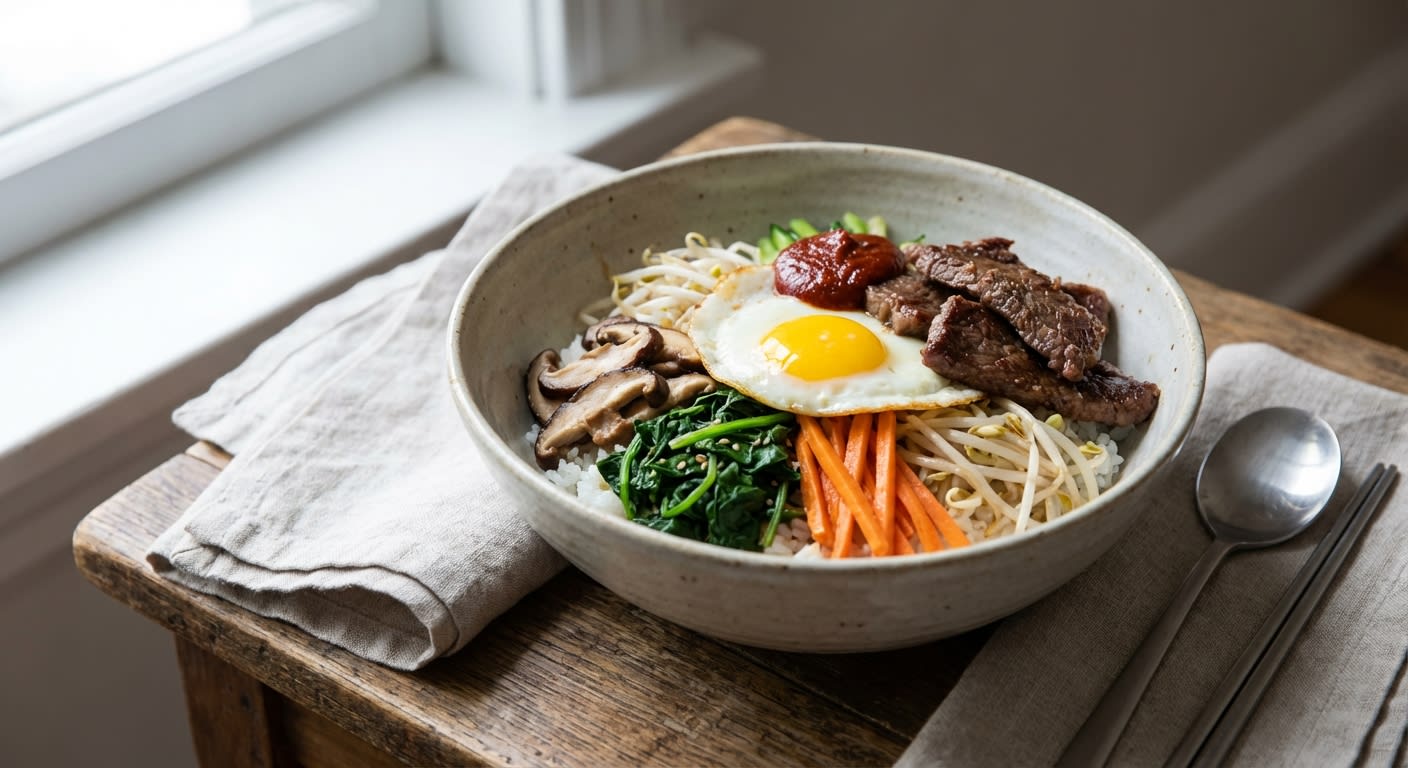
A vibrant Korean mixed rice dish with seasoned vegetables, protein, and a fried egg, all brought together by a spicy gochujang sauce.
Advertisement
Bibimbap: A Symphony of Flavors in Every Bite
Bibimbap, meaning "mixed rice," is a quintessential Korean dish that's as visually appealing as it is delicious. This vibrant bowl is a harmonious blend of textures and flavors, from the savory marinated beef to the crisp vegetables and the richness of a perfectly fried egg, all tied together by the spicy kick of gochujang sauce. This recipe offers a step-by-step guide to creating a truly authentic Bibimbap experience.
Ingredients
-
For the Rice:
- 2 cups cooked short-grain rice (day-old rice works best!)
-
For the Beef Marinade:
- 8 oz thinly sliced beef ribeye (or substitute sirloin, bulgogi-cut)
- 1 tbsp soy sauce
- 1 tsp sesame oil
- 1/2 tsp sugar
- 1 clove garlic, minced
- 1/2 tsp grated ginger
-
For the Vegetables:
- 1 carrot, julienned
- 1 zucchini, julienned
- 4 oz spinach, blanched and squeezed dry
- 4 oz bean sprouts, blanched
- 4 oz shiitake mushrooms, sliced
-
For the Eggs:
- 2 eggs
- 2 tbsp vegetable oil
-
For the Gochujang Sauce:
- 2 tbsp gochujang (Korean chili paste) - adjust to your spice preference
- 1 tbsp sesame oil
- 1 tbsp rice vinegar
- 1 tsp sugar (or honey)
-
Garnish:
- Sesame seeds
Instructions
-
Marinate the Beef: In a medium bowl, combine the thinly sliced beef with soy sauce, sesame oil, sugar, minced garlic, and grated ginger. Mix well and let it marinate for at least 15 minutes, or up to an hour in the refrigerator.
-
Prepare the Vegetables:
- Julienne the carrot and zucchini into thin strips.
- Blanch the spinach and bean sprouts separately in boiling water for about 1 minute each. Immediately transfer to an ice bath to stop the cooking process. Squeeze out any excess water.
- Sauté the sliced shiitake mushrooms in a lightly oiled pan until tender and slightly browned. Season with a pinch of salt and pepper.
-
Cook the Beef: Heat a skillet over medium-high heat. Add the marinated beef and cook, stirring frequently, until browned and cooked through (about 3-5 minutes).
-
Fry the Eggs: Heat vegetable oil in a non-stick pan over medium heat. Fry the eggs sunny-side up, leaving the yolks runny if desired.
-
Make the Gochujang Sauce: In a small bowl, whisk together gochujang, sesame oil, rice vinegar, and sugar (or honey) until well combined. Taste and adjust the sweetness and spice to your liking.
-
Assemble the Bibimbap:
- Divide the cooked rice evenly into two bowls.
- Arrange the marinated beef, carrots, zucchini, spinach, bean sprouts, and shiitake mushrooms artfully on top of the rice in separate sections.
- Place a fried egg on top of each bowl.
-
Serve: Drizzle the gochujang sauce generously over the bibimbap. Garnish with sesame seeds. Encourage diners to mix all the ingredients together thoroughly before eating.
Serving Suggestions
- Add more protein: Tofu or other meats can be added or used in place of the beef.
- Adjust the spice level: Control the amount of gochujang to suit your taste.
- Serve with banchan (Korean side dishes): Kimchi, pickled vegetables, and other small dishes complement the Bibimbap perfectly.
- Make it vegetarian/vegan: Substitute the beef with marinated tofu or tempeh. Ensure the gochujang is vegan-friendly.
- Add a drizzle of sesame oil: For an extra layer of nutty flavor, drizzle a small amount of sesame oil over the entire bowl just before serving.
Loading community feedback...